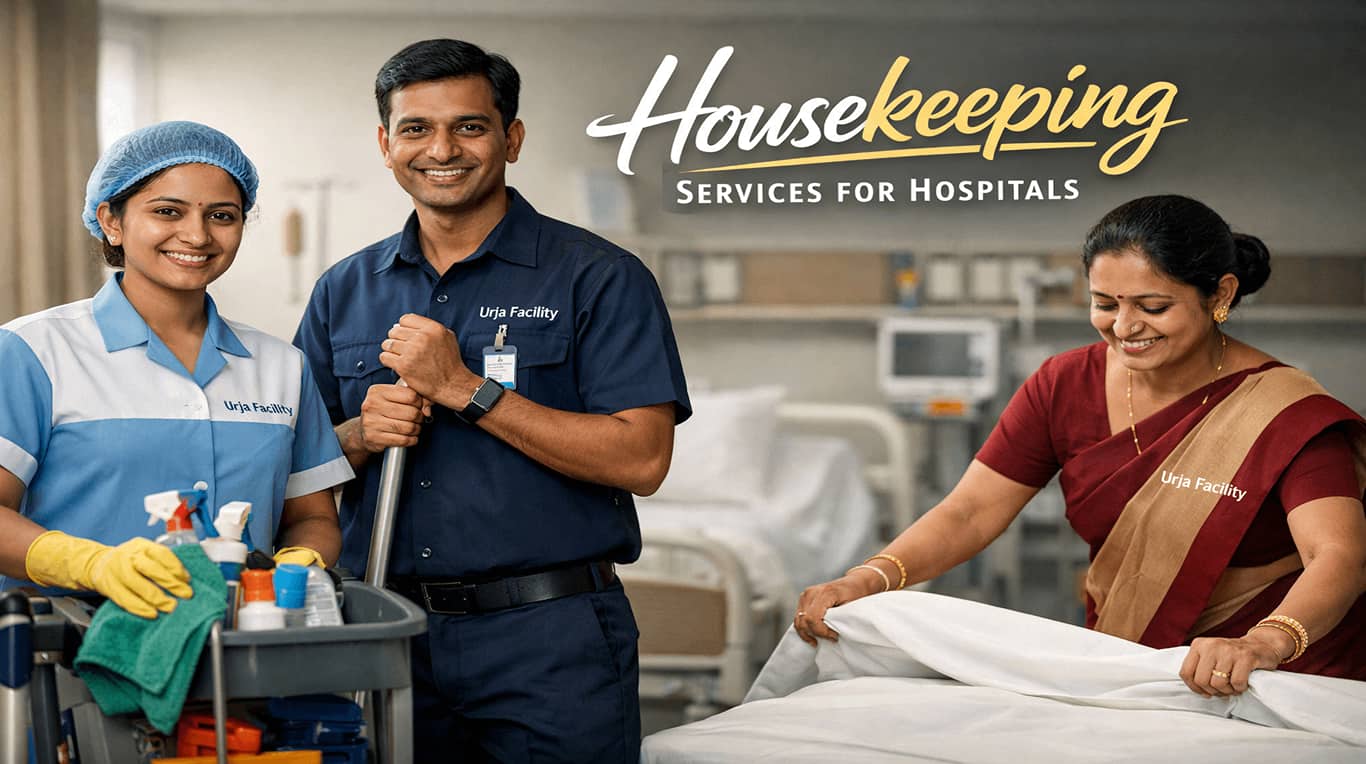
Healthcare environments demand the highest standards of cleanliness and infection control. Professional housekeeping services for hospitals play a crucial role in maintaining sterile conditions, preventing disease transmission and ensuring patient safety. Unlike routine commercial cleaning, hospital housekeeping requires structured protocols, trained manpower and advanced equipment to manage sensitive medical environments. Every surface, corridor, patient room and waiting area must meet strict hygiene benchmarks to reduce contamination risks.
Understanding what hospital housekeeping is helps hospital administrators recognise its strategic importance. It is not simply cleaning floors and dusting surfaces; it is an integrated system of sanitation, disinfection, waste handling and preventive maintenance. Urja Facility provides advanced Mechanized Housekeeping Services designed specifically for hospitals, combining technology, expertise and systematic processes to maintain hygienic healthcare spaces.
What Is Hospital Housekeeping?
To define what hospital housekeeping is, it refers to the organised management of cleaning, sanitation and maintenance activities within healthcare facilities. It involves maintaining patient rooms, operating theatres, ICUs, corridors, waiting lounges, laboratories and administrative areas according to strict infection control standards.
Hospital housekeeping differs significantly from standard cleaning services. In medical settings, cleaning must align with healthcare regulations, biomedical waste guidelines and contamination control procedures. Staff must follow disinfectant protocols, manage hazardous waste safely and ensure that high-touch surfaces are sanitised regularly. Effective hospital housekeeping supports clinical teams by maintaining a safe environment where medical procedures can be carried out without additional infection risks.
Importance of Housekeeping in Hospital Environments
The importance of housekeeping in hospital settings cannot be overstated. Hospitals operate around the clock, handling vulnerable patients with weakened immune systems. Poor hygiene can contribute to hospital-acquired infections, which compromise patient recovery and increase operational costs.
A well-structured housekeeping system ensures that pathogens are eliminated from frequently touched areas such as bed rails, door handles, lift buttons and nurse stations. Clean and disinfected spaces also enhance patient confidence and create a reassuring atmosphere for families and visitors. Moreover, regulatory authorities closely monitor hospital hygiene standards. Professional housekeeping services for hospitals help healthcare institutions comply with safety guidelines and maintain accreditation standards.
Beyond infection control, proper housekeeping improves operational efficiency. Organised spaces reduce clutter, support faster patient turnover and create safer working conditions for medical staff.
Housekeeping Duties and Responsibilities in Hospital Facilities
Understanding housekeeping duties and responsibilities in hospital environments helps clarify the complexity of healthcare cleaning operations. These responsibilities extend beyond visible cleaning tasks and involve coordinated efforts to maintain sanitation throughout the facility.
- Cleaning and disinfecting patient rooms, ICUs, operating theatres and isolation wards as per healthcare protocols
- Sanitising high-touch surfaces, including bed rails, switches, door handles and medical equipment exteriors
- Managing biomedical waste in coordination with hospital waste management teams
- Maintaining hygiene in corridors, waiting areas, elevators and administrative offices
- Ensuring washrooms are disinfected frequently to prevent cross-contamination
- Supporting linen management and safe transport of soiled materials
These structured duties reduce contamination risks and maintain safe, functional healthcare environments.
Mechanised Housekeeping Services for Hospitals
Modern healthcare facilities require advanced cleaning systems that go beyond manual methods. Urja Facility offers Mechanised Housekeeping Services tailored specifically for hospitals, ensuring deep cleaning, precision sanitisation and efficient facility management.
Mechanised Housekeeping Services involve advanced mechanised cleaning solutions using state-of-the-art equipment and technology for comprehensive facility maintenance and hygiene management. These systems are designed to meet the high standards demanded in hospitals where consistency and thoroughness are essential.
By using mechanised solutions, hospitals achieve uniform cleanliness across large areas, reduce manual errors and ensure faster turnaround times for room readiness. Mechanisation also minimises physical strain on housekeeping staff and enhances operational productivity.
Advanced Equipment Used in Hospital Housekeeping
Urja Facility integrates advanced tools and technology into hospital housekeeping operations to ensure consistent results:
- Automated floor scrubbing and polishing machines for large corridors and patient wards
- High-pressure cleaning systems for exterior areas and service zones
- Industrial vacuum cleaning equipment for dust-free indoor air quality
- Mechanised window cleaning systems for multi-storey hospital buildings
- Advanced sanitisation equipment designed for infection-prone areas
These machines improve efficiency, maintain hygiene standards and ensure compliance with healthcare cleaning protocols.
Benefits of Mechanised Housekeeping Services for Hospitals
Mechanised housekeeping services deliver measurable benefits to healthcare institutions. Advanced cleaning equipment ensures thorough disinfection, reducing the risk of pathogen spread in high-risk zones. Standardised processes create uniform cleaning outcomes across departments, improving overall hygiene reliability.
Faster cleaning cycles allow patient rooms to be prepared quickly for new admissions, increasing operational efficiency. Mechanised systems also improve indoor air quality by effectively removing dust and allergens. By maintaining spotless environments, hospitals enhance patient trust and demonstrate commitment to safety. Over time, preventive cleaning reduces infrastructure wear and lowers maintenance expenses.
Annual Maintenance Contracts for Hospital Housekeeping
Hospitals require continuous cleaning and sanitation, making structured service agreements essential. Annual Maintenance Contracts provide scheduled cleaning, periodic deep sanitisation and ongoing monitoring to ensure consistent standards throughout the year.
With Annual Maintenance Contracts, hospitals receive planned inspections, preventive maintenance and routine disinfection without operational interruptions. These contracts allow predictable budgeting while ensuring compliance with healthcare regulations. Regular quality audits and performance evaluations further strengthen accountability and service consistency.
For large hospitals and multi-location healthcare chains, structured maintenance programs provide stability, long-term hygiene assurance and efficient facility management.
Why Choose Urja Facility for Housekeeping Services for Hospitals
Selecting the right housekeeping partner is critical for healthcare facilities. Urja Facility combines technical expertise, trained manpower and advanced mechanised solutions to deliver reliable housekeeping services for hospitals.
The team understands the importance of housekeeping in hospital environments and follows strict healthcare cleaning protocols. Staff are trained to handle infection-prone zones with care, ensuring patient safety remains the top priority. Mechanised equipment enhances consistency and ensures that cleaning processes meet required hygiene standards.
Urja Facility adopts a safety-first and compliance-driven approach. Continuous supervision, quality checks and structured reporting systems ensure transparency and accountability. By offering customised solutions tailored to hospital size and operational needs, Urja Facility supports healthcare institutions in maintaining high hygiene benchmarks.
Challenges in Hospital Housekeeping and How Professionals Solve Them
Hospital housekeeping presents unique challenges due to continuous operations and sensitive environments. Healthcare facilities operate twenty-four hours a day, leaving limited windows for deep cleaning. High patient footfall increases contamination risks in common areas. Emergency spills and infection outbreaks require immediate response and specialised disinfection procedures.
Professional housekeeping teams address these challenges through systematic planning, trained manpower deployment and mechanised equipment usage. Isolation zones are handled with strict protocols and high-touch areas are disinfected at regular intervals. Continuous monitoring ensures that hygiene standards are maintained despite operational pressures.
By integrating technology with structured processes, mechanised housekeeping services create safe, organised and contamination-free hospital environments.
Conclusion
Housekeeping services for hospitals are fundamental to infection prevention, patient safety and healthcare compliance. From understanding what hospital housekeeping is to recognising the importance of housekeeping in hospital environments, administrators must prioritise structured and professional solutions. Urja Facility delivers advanced Mechanized Housekeeping Services supported by trained teams and state-of-the-art equipment to maintain consistent hygiene standards.
With systematic processes, annual maintenance programs and technology-driven cleaning methods, hospitals can create safer spaces for patients and staff. Investing in professional housekeeping ensures long-term operational efficiency, regulatory compliance and enhanced trust in healthcare services.
Contact us today to implement professional housekeeping services for hospitals and ensure the highest standards of hygiene, safety and infection control for your healthcare facility.
FAQs
1. What are housekeeping services for hospitals?
Housekeeping services for hospitals involve structured cleaning, sanitisation, waste management and infection control practices designed to maintain hygienic patient rooms, operating theatres, corridors and public areas, ensuring safety compliance and a contamination-free healthcare environment at all times
2. What is hospital housekeeping?
Hospital housekeeping refers to the organised system of cleaning, disinfecting and maintaining healthcare facilities, including patient wards, ICUs, waiting areas and administrative zones to prevent infections, support medical staff and comply with healthcare hygiene regulations and safety standards
3. Why is housekeeping important in hospitals?
Housekeeping is important in hospitals because it reduces hospital-acquired infections, maintains sterile environments, protects vulnerable patients, ensures regulatory compliance, improves operational efficiency and builds trust among patients, visitors and healthcare professionals through consistent hygiene management practices
4. What are the housekeeping duties and responsibilities in hospital settings?
Housekeeping duties and responsibilities in hospital settings include disinfecting patient rooms, sanitising high-touch surfaces, managing biomedical waste, maintaining the washroom,s cleaning corridors, supporting linen handling and ensuring adherence to infection control protocols throughout the facility
5. How do mechanised housekeeping services benefit hospitals?
Mechanised housekeeping services benefit hospitals by using advanced equipment for deep cleaning, faster turnaround, consistent sanitization reduced manual errors, improved air quality and enhanced infection control across large healthcare facilities with minimal disruption to operations
6. What areas are covered under hospital housekeeping services?
Hospital housekeeping services cover patient rooms, ICUs, operation theatres, waiting lounges, corridors, elevators, washrooms, laboratories, administrative offices and external areas, ensuring comprehensive cleanliness, sanitation and safety throughout the entire healthcare facility
7. How often should hospital housekeeping services be performed?
Hospital housekeeping services should be performed daily with frequent disinfection of high-risk zones, periodic deep cleaning, scheduled inspections and continuous monitoring to maintain hygiene standards, infection prevention and compliance with healthcare regulations throughout the year.